



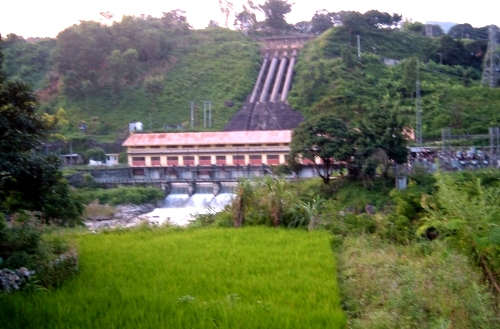
Rescuers in Nepal have pulled two workers alive from an underground hydropower tunnel nine days after catastrophic floods swept through the Himalayan region. The breakthrough at the Upper Trishuli 3A project in Rasuwa district has renewed hope that more people may still be alive inside a network of damaged tunnels.
Officials identified the survivors as mechanical foreman Sanjay Sah and mechanical supervisor Kabir Maharjan. Search teams located them after hearing voices from inside the tunnel on Friday morning. Images released from the operation showed soldiers and emergency workers carrying a mud-covered survivor through the confined passage.
Both men were taken by air to a hospital in Kathmandu. Early official statements said one was in critical condition, while subsequent local reporting described both as receiving treatment after prolonged exposure, injuries and oxygen deprivation. Their precise medical condition remains subject to hospital updates.
How the rescue unfolded
The men had been trapped since August 26, when fast-moving floodwater, mud and debris struck communities and hydropower facilities along river valleys near the Nepal–Tibet border. Access roads, bridges and communications were destroyed, making it difficult for rescue teams to reach isolated sites.
At Upper Trishuli 3A, personnel from the Nepal Army worked with Nepal Electricity Authority technicians who understood the underground layout. The teams entered the powerhouse and tunnel complex, listening for signs of life while navigating unstable ground, mud, damaged machinery and the continuing risk of water entering enclosed spaces.
The rescue became possible after voices were detected. One survivor reportedly told emergency personnel that others could still be alive inside, prompting teams to continue searching rather than treat the operation solely as a recovery effort.
Who are the rescued workers?
Local reporting says Sah was working in the project’s control room when the flood arrived and stayed behind while trying to help colleagues escape. Maharjan had travelled to the site for maintenance work. They became cut off inside the underground installation as water and debris blocked the exits.
Surviving nine days in darkness would have required access to an air pocket and some protection from the strongest floodwater. Authorities have not yet published a complete engineering account of the conditions inside, so early explanations should be treated cautiously until rescue teams finish documenting the site.
Why authorities believe others may be alive
Hydropower tunnels are complex structures with galleries, machinery rooms and elevated or sealed sections. Even when entrances are flooded or buried, internal spaces can sometimes retain breathable air. That possibility is driving the painstaking search across several affected projects.
Officials and industry representatives have issued changing estimates as access improves. Current reports indicate that hundreds of hydropower workers remain unaccounted for across multiple sites, while dozens are believed to have been inside Upper Trishuli 3A. These numbers should not be read as confirmed casualties: lists can include people who escaped independently or have not yet contacted their families.
The discovery of Sah and Maharjan demonstrates why rescuers must inspect survivable spaces methodically. Heavy machinery can clear external debris, but work inside unstable tunnels often depends on small teams, structural assessment, ventilation and careful excavation.
A disaster extending beyond one tunnel
The floods have devastated settlements, roads, power stations and transmission infrastructure across parts of Nepal. Authorities have reported a very high death toll and thousands missing, while communities on the Tibetan side of the border have also suffered major losses.
The scale of the disaster is still developing. Totals have changed as communications return and search teams reach remote valleys. HMP is therefore treating official figures as provisional rather than presenting them as a final accounting.
Nepal’s hydropower system is central to the country’s electricity supply and economy. Damage to generating stations and access infrastructure could cause extended disruptions even after the immediate rescue phase. Engineers will need to inspect dams, tunnels, turbines and transmission connections before affected plants can safely resume operation.
Climate and glacial risk
Preliminary assessments have linked the flash flooding to a possible collapse involving glacial ice and rock near the high-altitude border region. Scientists have repeatedly warned that warming temperatures can destabilise glaciers and create or enlarge lakes capable of releasing enormous volumes of water with little warning.
However, assigning a definitive cause to this event requires satellite analysis, field inspection and hydrological data. The immediate priority remains finding survivors, supporting displaced families and preventing additional deaths.
What happens next?
Rescue teams are continuing to search the Upper Trishuli 3A complex and other hydropower tunnels. Their priorities include maintaining ventilation, locating voids, clearing debris without causing collapses and moving survivors safely through damaged passages.
The survival of two workers after nine days offers a rare point of hope amid a national emergency. It also underlines the importance of resisting premature conclusions: missing-person estimates, casualty figures and the disaster’s physical cause remain under active investigation.
Follow HMP’s World coverage for verified updates and read our broader international conflict explainer for another example of HMP’s verification-first reporting.
Verification note: HMP cross-checked the rescue with statements attributed to the Nepal Army, Nepal Electricity Authority personnel, local officials and multiple independent reports. Casualty and missing-person totals remain provisional.