



Russia’s expanding missile-and-drone campaign against Ukraine has entered another dangerous phase, with repeated strikes on Kyiv and other cities coinciding with a sharp rise in civilian casualties and a widening Ukrainian drone campaign inside Russia. The immediate facts are grim, but the information environment is also crowded with battlefield claims that cannot all be independently verified. This report separates confirmed findings from official assertions and explains the strategic picture.
What happened in the latest wave
Kyiv endured more than 12 hours of bombardment on 1 September, according to Associated Press reporting based on Ukrainian authorities and observations from the capital. At least 12 people were reported killed in Kyiv and the surrounding region, and more than a dozen were wounded, including children. Residential buildings and civilian infrastructure were damaged. Six railway employees were among those reported killed after a ballistic missile struck a depot and related property.
Ukraine’s air force said the assault involved ballistic, cruise and anti-radar missiles alongside 218 drones and decoys. About one-third of the drones were described as jet-powered—a faster class of weapon that places additional pressure on air-defence systems. Russia’s Defence Ministry confirmed a large strike but said it targeted weapons production, storage sites and military-linked infrastructure. That target description is a Russian official claim; damage to residential areas and the civilian death toll were separately documented by Ukrainian officials and international reporting.
A sustained campaign, not an isolated night
The attack was reported as the sixth consecutive day of major Russian pressure on Kyiv, followed by further strikes. The pattern matters because repeated alerts force schools, transport operators, hospitals and businesses to keep switching into emergency mode even when a weapon is intercepted. Ukraine’s president said nearly 350 emergency workers were deployed in Kyiv and the surrounding region after the 1 September attack.
The United Nations Human Rights Monitoring Mission in Ukraine reported that July 2026 produced the highest monthly number of civilian deaths and injuries it had recorded since March 2022: at least 437 civilians killed and 2,610 injured. For the first seven months of 2026, the UN verified 12,477 civilian casualties—1,839 killed and 10,638 injured—while warning that the real total was probably higher.
Why drones now shape both sides’ strategy
Russia is combining long-range drones with missiles to saturate Ukrainian defences, identify gaps and force Kyiv to spend scarce interceptors. Jet-powered drones reduce reaction time and can complicate interception. Ballistic missiles remain especially difficult to stop and can deliver much heavier damage.
Ukraine, meanwhile, has expanded long-range drone strikes against targets inside Russia, including oil refineries, ports, logistics facilities and other infrastructure connected to Moscow’s war economy. Russia’s Defence Ministry said it intercepted 516 Ukrainian drones overnight across 18 regions, occupied Crimea and the Black Sea during the same period. That figure has not been independently verified. Russian authorities have acknowledged disruption and fires at some facilities.
The strategic logic is different on each side. Moscow is trying to weaken Ukrainian infrastructure, exhaust air defences and erode public resilience. Kyiv is attempting to raise the economic and logistical cost of the invasion while compensating for the difficulty of achieving a decisive breakthrough along heavily fortified front lines.
What is verified—and what remains uncertain
- Verified with strong independent support: repeated Russian aerial attacks struck Kyiv and other Ukrainian regions; civilians were killed and wounded; residential and transport infrastructure sustained damage.
- Verified by the UN: civilian harm increased sharply in 2026, with long-range missiles and drones a leading cause.
- Official Ukrainian claim: the detailed number and type of incoming weapons, plus interception results. These are operational figures that are difficult to verify in real time.
- Official Russian claim: strikes were directed at military-related facilities and hundreds of Ukrainian drones were intercepted. The scale and effectiveness of those interceptions remain independently unconfirmed.
- Not established by current evidence: that either side’s drone campaign has produced a decisive strategic turning point.
Diplomacy remains disconnected from battlefield pressure
Russian President Vladimir Putin said there remained a possibility of a peace agreement, while arguing that Ukrainian attacks on shipping and warnings about Russian airspace made renewed talks harder. Ukraine says greater military pressure is necessary because negotiations have not stopped Russian attacks. These positions leave a central contradiction: both governments describe coercion as a route toward peace, yet the immediate result is continued escalation.
Any durable settlement would have to address territory, security guarantees, sanctions, prisoners, civilian protection and enforcement. Public comments about a possible deal do not by themselves show agreement on those core issues.
Why this matters beyond Europe
The war affects grain, fertiliser, energy, insurance and shipping markets. India has economic and diplomatic relationships with both Russia and Ukraine, while Indian citizens continue to travel, study and work across the region. One of those reported killed in the latest Kyiv wave was an Indian citizen, underscoring that the conflict’s human consequences are not confined to the combatants.
HMP assessment
The best-supported conclusion is that the air war is intensifying while the ground war remains difficult and diplomacy remains fragile. Claims of total interception, precise targeting or imminent victory should be treated cautiously unless corroborated. The civilian trend documented by the United Nations is the clearest measurable warning: the longer the exchange expands, the greater the risk to urban populations on both sides.
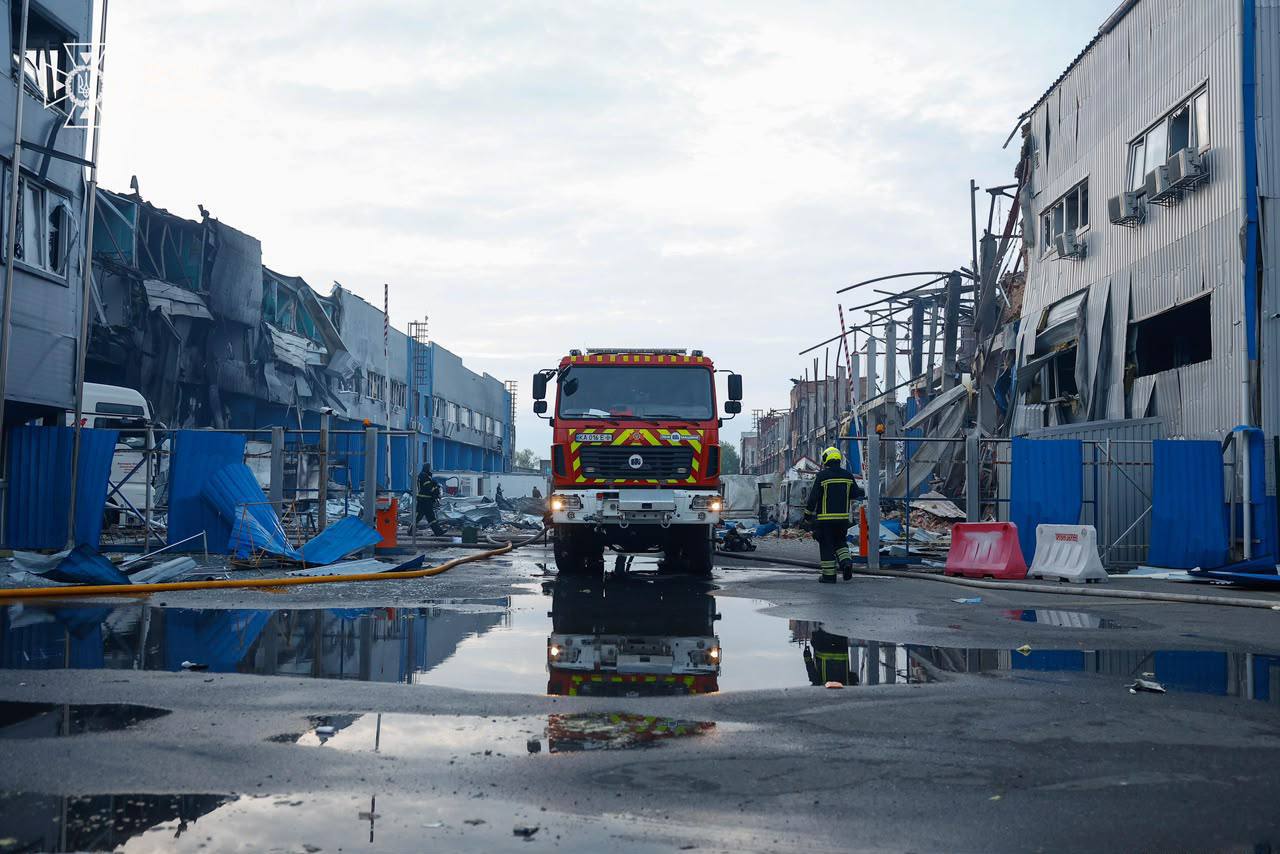
Image: State Emergency Service of Ukraine, via Wikimedia Commons, CC BY 4.0. The photograph shows emergency response after a Russian attack on Kyiv on 8 July 2026; it is illustrative of the ongoing campaign and is not presented as an image of the 1 September strike.



.jpg)